


Breaking barriers together
Widening participation and increasing equity in south east London's health and care workforce
Drawing on insights from VCSE organisations and partners, the project sets out solutions to reduce barriers and strengthen pathways into employment for under-represented groups, and build a health and care workforce that better reflects the communities it serves.

Partner organisations



.png)
Funded by
Co-Designing Meaningful Change
This project was funded by Health Education England (HEE), coordinated by the SEL VCSE Strategic Alliance and South East London Integrated Care Board (ICB), and developed and delivered by specialist "By and For" VCSE organisations in collaboration with the communities they serve.
This executive summary shares insights and actionable solutions from the South East London Widening Participation and Increasing Equity in Health and Care Workforce project, which took place between October 2023 and April 2024. The project aimed to identify barriers preventing specific communities from accessing careers in health and care and to co-create solutions to improve access and representation.
Five groups were identified as being under-represented in the South East London health and care workforce:
- People with caring responsibilities, including young carers
- People from Black, Caribbean and African heritage communities
- Migrants, refugees and asylum seekers
- D/deaf and hard of hearing individuals
- Neurodivergent people
Experts by Experience
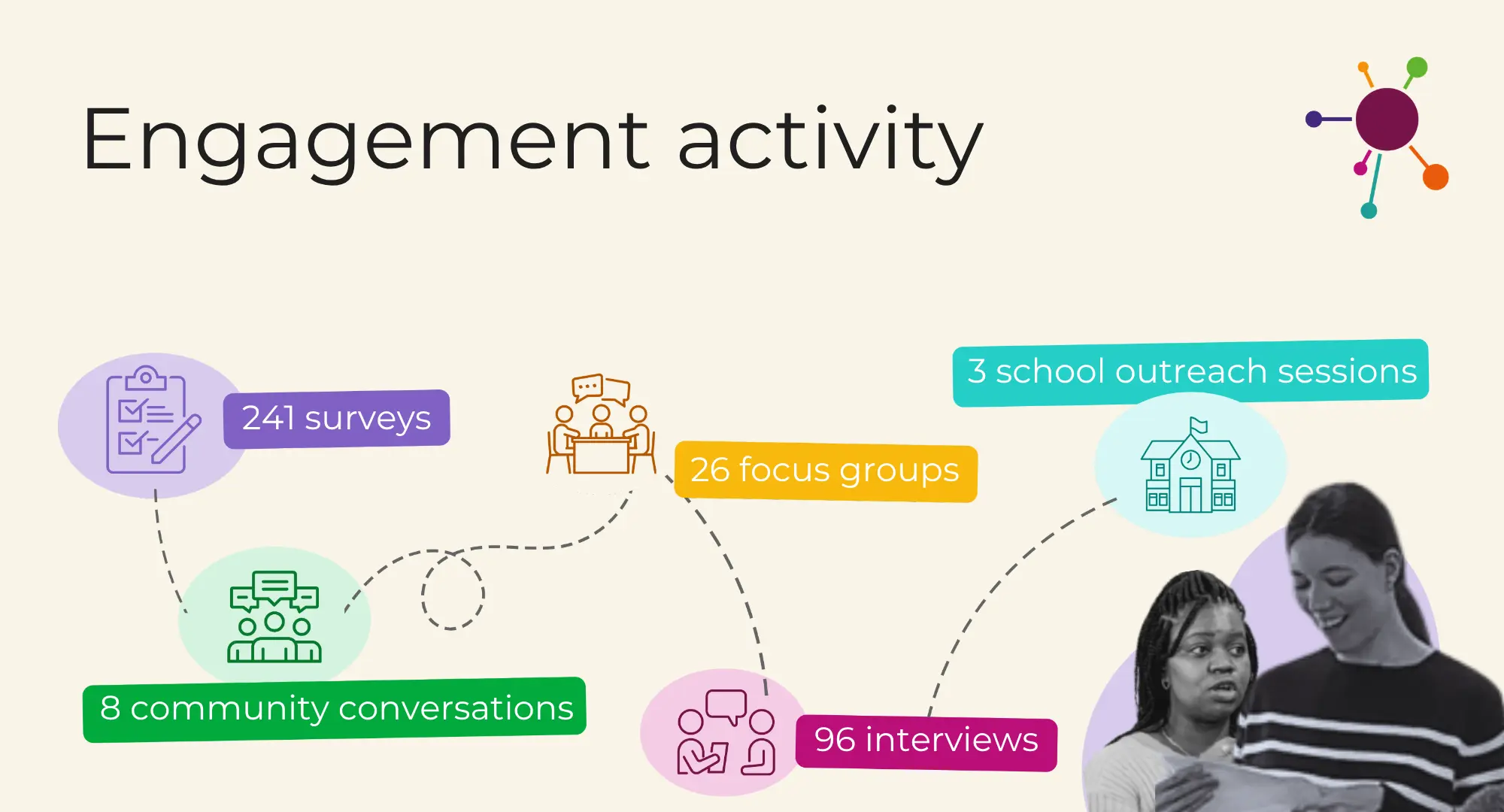
The project partnered with seven specialist "By and For" VCSE organisations embedded within the target communities. Community members were involved throughout the design and delivery process and were fairly paid for their expertise and participation.
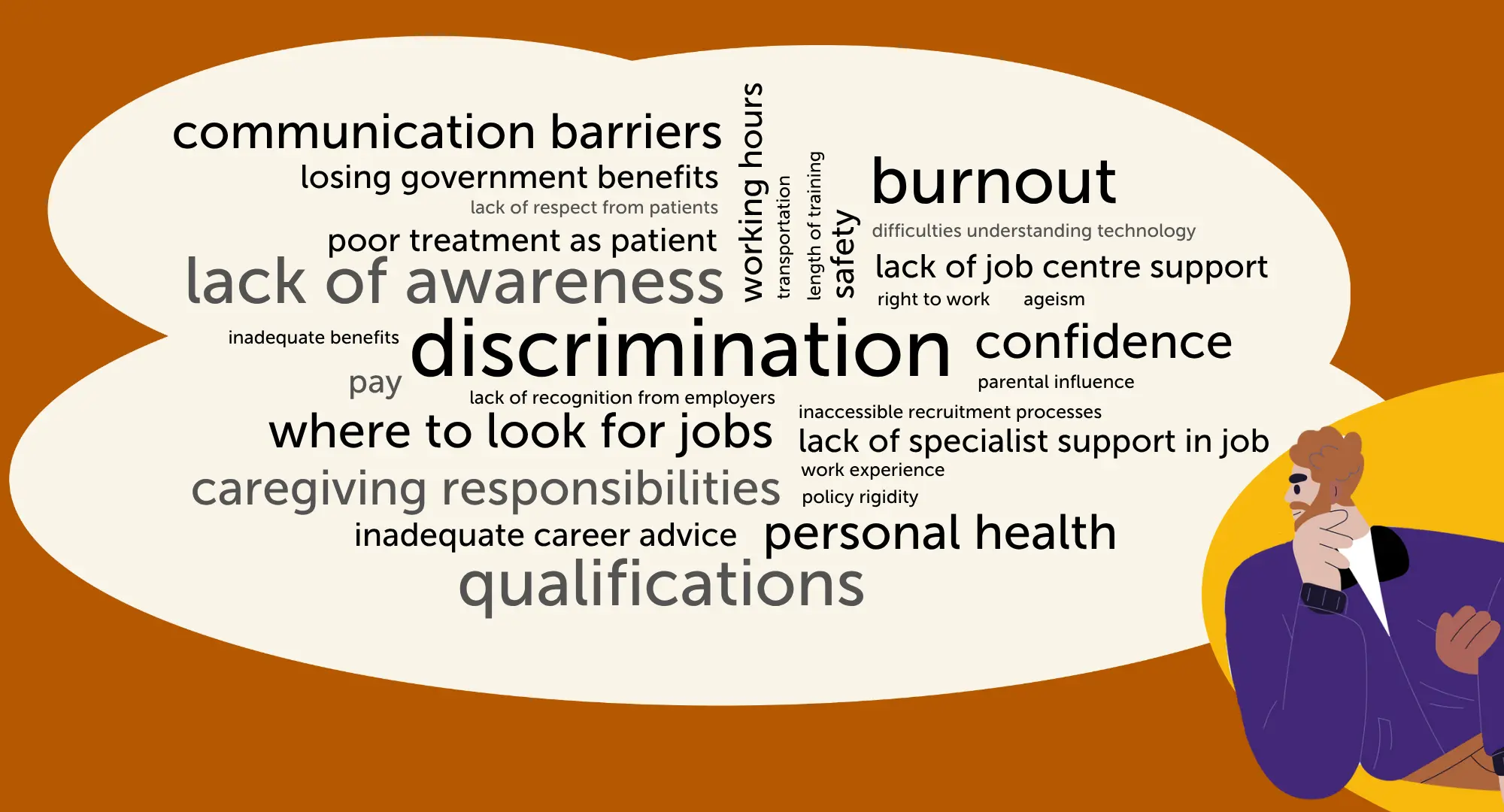
Barriers to Employment
Communities identified a range of barriers preventing them from considering or accessing careers in health and care. While each group had unique experiences, many barriers were shared across communities.
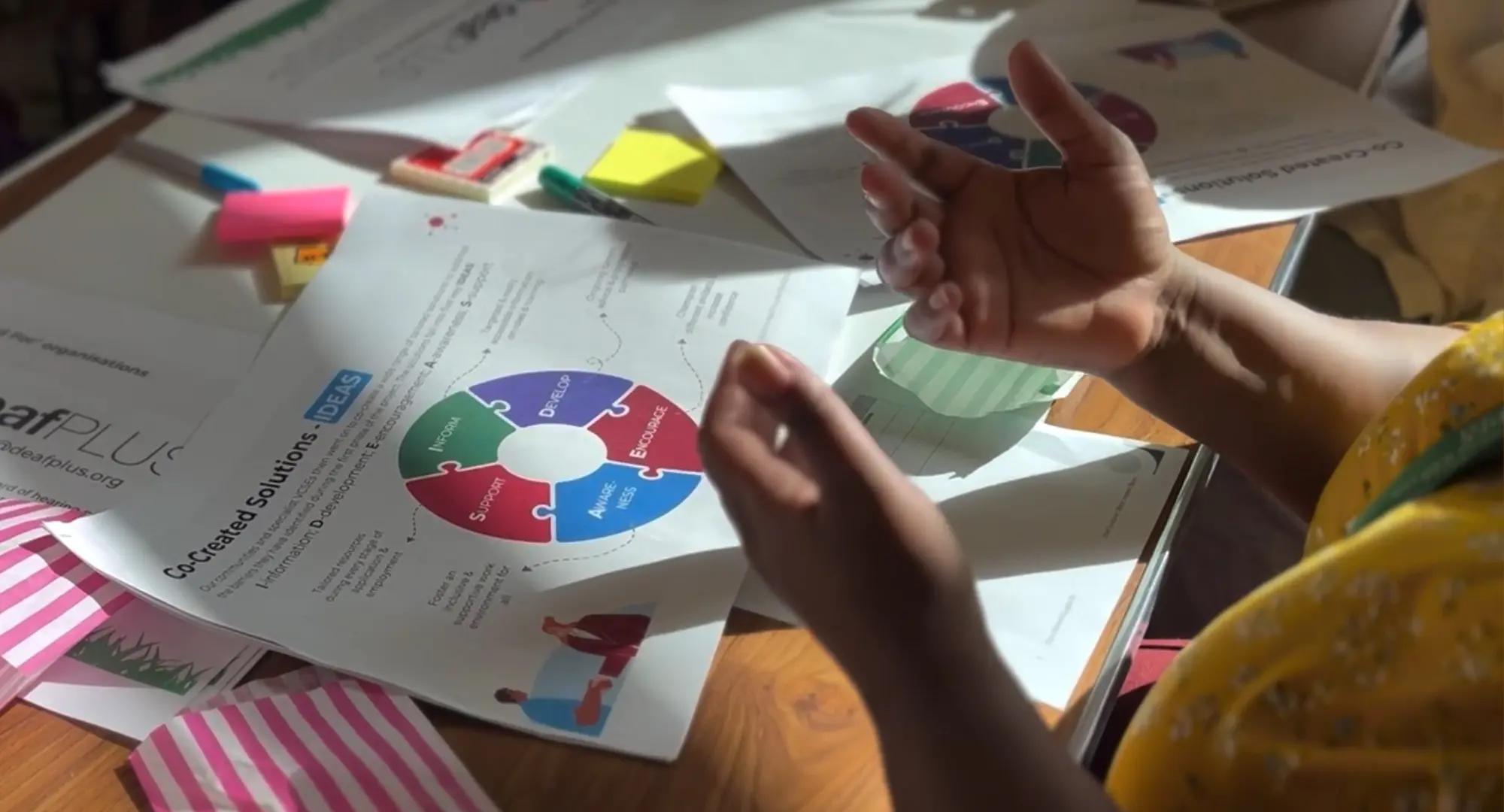
Co-Created Solutions: IDEAS Framework
Solutions developed by communities and VCSE partners were organised into five themes:
- Inform: Targeted and easily accessible information on roles and training
- Develop: Ongoing careers advice and progression pathways
- Encourage: Champion different skillsets and increase confidence
- Awareness: Foster an inclusive and supportive work environment for all
- Support: Tailored resources during every stage of application and employment
Collaborative seminar
On September 26th 2024, SEL VCSE Strategic Alliance hosted an in-person workshop at St Andrew’s Church in Waterloo, bringing together our By and For organisations and Experts by Experience with leaders and changemakers from South East London's Integrated Care System (ICS). The session focused on how our proposed solutions can be practically implemented and the barriers that need to be addressed before participation and equity can be expanded in our health and care workforce. Working together, attendees shared a wealth of insights into the work already being done, and the gaps that need to be addressed on both regional and organisational level. The collaborative seminar concluded with key commitments that we can collaboratively take forward with our statutory partners to immediately begin breaking down the barriers experienced by our five under-represented groups and begin the journey to true inclusivity in south east London's health and care workforce.
Key learnings so far
Solution: Inform
Key recommendations:
- Advertise healthcare opportunities through specialist "By and For" charities and volunteer centres.
- Ensure HR and recruitment staff attend community hubs to share information about careers.
- Develop personalised health career coaching through community organisations.
- Provide support with job searching, understanding role requirements and interview preparation.
For Migrants / refugees / asylum seekers specifically:
- Support asylum seekers to access roles on the shortage occupation list where eligible.Provide tailored information about healthcare careers, including:
- Role responsibilities
- Required skills and attitudes
- Pay and progression routes
- Workplace culture and expectations
- Team structures and hierarchy
Solution: Inform
Key Recommendations:
- Develop accessible job information with minimal jargon and greater use of visual content.
- Raise awareness of financial support schemes, bursaries and assistance with childcare, accommodation and travel.
- Create recruitment checklists to support applicants through recruitment and onboarding.
For D/deaf and hard of hearing individuals:
- Produce British Sign Language (BSL) videos explaining:
- What it is like to work in healthcare
- Available workplace support
- How to access support
- Experiences of existing deaf staff
For neurodivergent people:
- Co-design easy-read recruitment packs and job advertisements.
For migrants / refugees / asylum seekers:
- Review recruitment agencies and ensure transparency around English-language requirements.
- Avoid placing individuals into roles they do not feel equipped to undertake.
Solution: Develop
Key Recommendations
- Create clear progression pathways for staff from under-represented groups.
- Review job descriptions and person specifications to improve accessibility.
- Keep recruitment information concise and relevant.
- Advertise opportunities beyond NHS and local authority platforms.
- Develop practical support programmes that help people stay in work.
For Migrants, Refugees and Asylum Seekers
- Provide immigration casework support for international staff.
- Create tailored support packages including:
- Contract checking
- Financial transition support
- Appropriate work clothing schemes
Solution: Develop
Key Recommendations
- Develop buddying schemes for neurodivergent employees.
- Create personalised workplace support plans.
- Develop communities of practice for sanctuary seekers.
- Provide culturally informed employment support and supervision.
For Black, Caribbean and African Heritage Communities
- Improve access to culturally tailored wellbeing and employment support.
- Address stigma surrounding mental health and workplace wellbeing.
Solution: Encourage
Key Recommendations
- Attend careers fairs and community events.
- Deliver talks in schools and colleges.
- Create workplace coaching and advocacy roles.
- Promote role models from under-represented communities.
- Deliver skills-enhancing workshops.
For Migrants, Refugees and Asylum Seekers
- Increase access to employment support training, including CV writing and interview preparation.
For Neurodivergent People
- Explore job carving approaches that align roles with individual strengths and abilities.
For Young Carers and Young People
- Collaborate with programmes such as NHS Cadets to improve pathways into health and care careers.
Solution: Encourage
Key Recommendations
- Train staff on Access to Work schemes.
- Develop supported apprenticeship programmes.
- Create dedicated pathways into employment for groups with additional needs.
- Make role-specific training courses free wherever possible.
- Co-design learning opportunities with communities, VCSE organisations and colleges
For People with Caring Responsibilities
- Provide flexible training programmes that can be completed online, in person and at an individual's own pace.
For Migrants, Refugees and Asylum Seekers
- Support recognition and transfer of overseas qualifications.
- Create volunteering and work experience opportunities prior to immigration status regularisation.
- Support wider calls for reform of Right to Work policies.
Solution: Awareness
Key Recommendations
- Train staff on Access to Work schemes.
- Develop supported apprenticeship programmes.
- Create dedicated pathways into employment for groups with additional needs.
- Make role-specific training courses free wherever possible.
- Co-design learning opportunities with communities, VCSE organisations and colleges
For People with Caring Responsibilities
- Provide flexible training programmes that can be completed online, in person and at an individual's own pace.
For Migrants, Refugees and Asylum Seekers
- Support recognition and transfer of overseas qualifications.
- Create volunteering and work experience opportunities prior to immigration status regularisation.
- Support wider calls for reform of Right to Work policies.
Solution: Awareness
Key Recommendations
- Train staff on Access to Work schemes.
- Develop supported apprenticeship programmes.
- Create dedicated pathways into employment for groups with additional needs.
- Make role-specific training courses free wherever possible.
- Co-design learning opportunities with communities, VCSE organisations and colleges
For People with Caring Responsibilities
- Provide flexible training programmes that can be completed online, in person and at an individual's own pace.
For Migrants, Refugees and Asylum Seekers
- Support recognition and transfer of overseas qualifications.
- Create volunteering and work experience opportunities prior to immigration status regularisation.
- Support wider calls for reform of Right to Work policies.
Solution: Support
Key Recommendations
- Ensure access to interpreting and communication support throughout recruitment.
- Make recruitment processes more flexible and accessible.
- Review recruitment practices with people from under-represented communities.
- Use accessible digital platforms and documentation.
- Consider trial shifts and alternative assessment methods.
D/deaf and Hard of Hearing Individuals
- Provide:
- BSL interpreting support
- Accessible interview environments
- Communication support workers where required
- Appropriate assessment accommodations
For Neurodivergent People
- Provide interview questions in advance.
- Clearly explain recruitment processes.
- Allow additional time and interview practice opportunities.
Solution: Support
Key Recommendations
- Increase investment in childcare support.
- Ensure workplace adjustments are available from the start of employment.
- Explore preferred communication approaches with employees.
- Provide training whenever workplace processes change.
For People with Caring Responsibilities
- Develop lone-parent and lone-carer policies that include:
- Flexible working patterns
- Caring breaks
- Flexibility during emergencies
For Black, Caribbean and African Heritage Communities
- Explore community-based childcare approaches involving trusted local networks and spaces.
Next Steps
We will be working with south east London anchor institutions, specialist VCSE organisations and communities to implement and progress the co-developed recommendations.
For more information about the project, contact:
info@selalliance.org.uk